Start with the load, then compare ratings at your conditions.
- DIY Mini-Split Buyer’s Guide 2026
- What Size Mini-Split Do I Need?
- SEER2, EER2 and HSPF2 Explained
- Cold-Climate Mini-Splits
How to use this section
- Get the load. ENERGY STAR and DOE both point to an ACCA Manual J load calculation, room by room. What size mini-split do I need explains what to gather and how to read the result.
- Match capacity at your conditions. Look up heating capacity at your outdoor design temperature in the maker’s performance data, not the nominal size in the model name. In cold climates, read cold-climate mini-splits: ENERGY STAR’s cold-climate criteria call for a COP of at least 1.75 at 5°F and heating capacity at 5°F of at least 70% of its capacity at 47°F.
- Compare ratings. SEER2, EER2 and HSPF2 explains the ratings used since January 1, 2023 and why Region V HSPF2 matters in cold climates.
- Check the practical limits. Line set length, circuit, refrigerant connections and permits; see installation.
- Estimate running cost. Use the operating cost calculator.
The DIY mini-split buyer’s guide walks through all of it in one place.
Ratings at a glance
| Rating | What it measures | Use it for |
|---|---|---|
| SEER2 | Seasonal cooling efficiency | Comparing summer running cost |
| EER2 | Cooling efficiency at a hot condition | Hot climates, peak demand |
| HSPF2 | Seasonal heating efficiency (Region IV or V) | Comparing winter running cost |
| COP at 5°F | Heating efficiency at 5°F | Cold-climate performance |
| Capacity at 5°F | Heat delivered at 5°F | Cold-climate sizing |
What we don’t do
We don’t test equipment. Figures come from manufacturer spec sheets and manuals, AHRI, ENERGY STAR, DOE, EPA and EIA, cited on each page and dated.
Why oversizing is a problem
A unit much bigger than the load reaches the thermostat setting quickly and then cycles or runs at its lowest speed, which can leave rooms clammy in summer because less moisture is pulled out of the air. Variable-speed (inverter) units reduce the problem by slowing down, but only down to their minimum capacity. That’s why DOE’s sizing guide says to match heads to room loads rather than rounding up (DOE guide). Compare a unit’s minimum capacity with your mild-weather load, not just its maximum with your design-day load.
Where to find the real numbers
- AHRI Directory. Certified SEER2, EER2 and HSPF2 for each exact indoor/outdoor combination (ahridirectory.org). Ratings apply only to the matched combination listed.
- NEEP cold-climate ASHP list. Manufacturer-reported capacity and COP at 47°F, 17°F and 5°F, at minimum, rated and maximum speeds (ashp.neep.org).
- ENERGY STAR product finder. Shows whether a combination meets the cold-climate criteria (energystar.gov).
- The installation manual. Line length limits, electrical data and clearances. Download it before you buy.
If these sources disagree with a retailer listing, trust the certificate and the manual.
DIY kits: check the line-set fit before you buy
With pre-charged DIY systems (EPA still requires Section 608 certification to connect the lines), the line sets come in fixed lengths, so the route has to fit the kit. MRCOOL’s R-454B DIY 5th Gen line sets come in 16, 25, 35 and 50 ft lengths. Longer runs need a matching coupler, and the finished run must stay within the condenser’s limit. The line-set diameter depends on the exact indoor model: a 9K or 12K head may use either 1/4″ × 3/8″ or 1/4″ × 1/2″ (MRCOOL Direct). Measure your actual route, including the drop down the wall, before you choose the kit.
Before you buy, confirm
- The AHRI certificate for the exact combination.
- Capacity at your design temperature.
- Line-set size and length for each head.
- Circuit voltage and amperage, and panel space for it.
- Who will make the refrigerant connections.
General information. For installation, follow your unit’s manual, EPA Section 608 rules, the NEC as adopted locally and local code, and use a licensed electrician where required.
All choosing a system guides
 Choosing a SystemDIY Mini-Split Buyer's Guide 2026How to choose a DIY mini-split in 2026: sizing with Manual J, reading SEER2 and HSPF2, cold-climate ratings, line sets, wiring, EPA…
 Choosing a SystemWhat Size Mini-Split Do I Need?How to size a mini-split: why ENERGY STAR and DOE point to an ACCA Manual J load calculation, why oversizing hurts, and…
 Choosing a SystemSEER2, EER2 and HSPF2 Explained for Mini-Split BuyersWhat SEER2, EER2 and HSPF2 mean, why they replaced SEER and HSPF in 2023, why the numbers are lower, and how to…
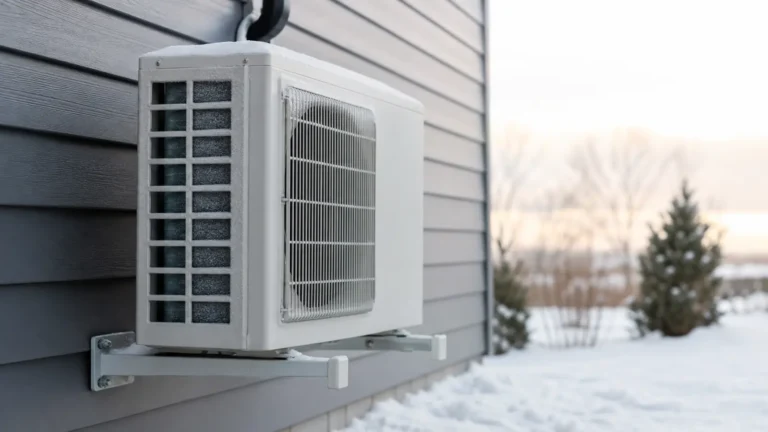 Choosing a SystemCold-Climate Mini-SplitsWhat makes a mini-split cold-climate: ENERGY STAR's COP of at least 1.75 at 5°F and 70% capacity retention, low-temperature operating limits, and…